Dec 9, 2010

6 weight training mistakes newbie should avoid

We have all been there at one time or another, inexperienced in fitness and joining a gym for the first time. You are nervous and unsure what you are supposed to do. Here's 6 things you definitely shouldn't do.


 1. Don't Lift Without A Trainer!

You would think this one is obvious. I can't tell you how many times I have seen this happen and the victim gets injured and ends up quitting weight lifting forever. There is a right and wrong way to do every exercise and you won't learn the right way without someone teaching you. It is as simple as that. Regardless of how many magazines you have read or how many videos you have watched in the past, have a trainer show you what to do and then have him or her watch you to make sure you are performing the exercise correctly.
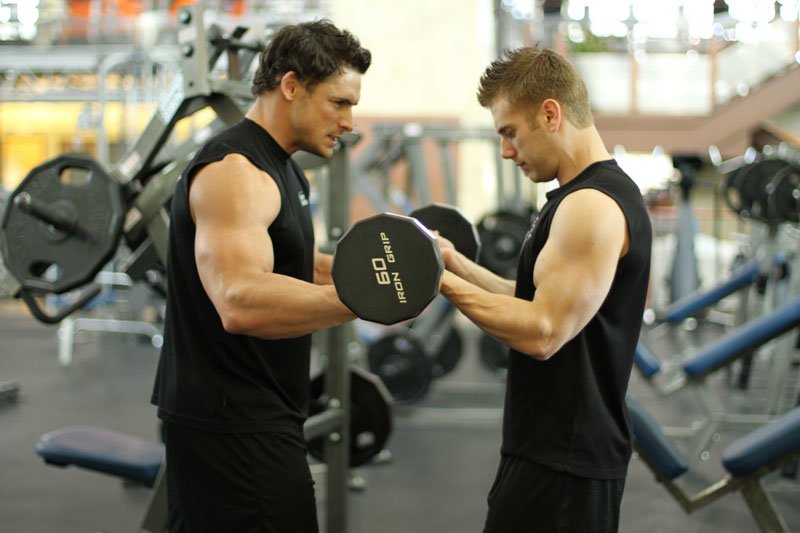
You Will Want Someone To Teach You The Proper Way To Do Exercises.
 
You Will Want Someone To Teach
You The Proper Way To Do Exercises.

2. Don't Be Afraid To Ask Questions!

You are not to be expected to know all there is to know about the weight room in one day, one week, or ever as a matter of fact. Everyone is learning and the only way you can learn is to ask someone. You should ask your trainer, but if for some reason you can't then ask someone who is in between sets. Most folks will take a minute or two to help out a newbie because they remember being newbies themselves. If you still feel uncomfortable, then when you get home, log on to Bodybuilding.com and look it up or ask folks on BodySpace. You will get your answer for sure.  

3. Don't Try To Impress The Big Guys!

I know how intimidating it is to be in a weight room and the next potential World's Strongest Man is over there lifting every plate in the gym. You feel like you want to prove you belong and you try to set a world record. The only record you set is the response time of the local EMTs. You name the person and he or she had to start somewhere. So do you. It is ok to start with a light weight to make sure you have the form down and know what muscles you are supposed to feel working. Eventually you will get to where you are lifting the heavy iron, but it takes time. That actually leads into the next tip.
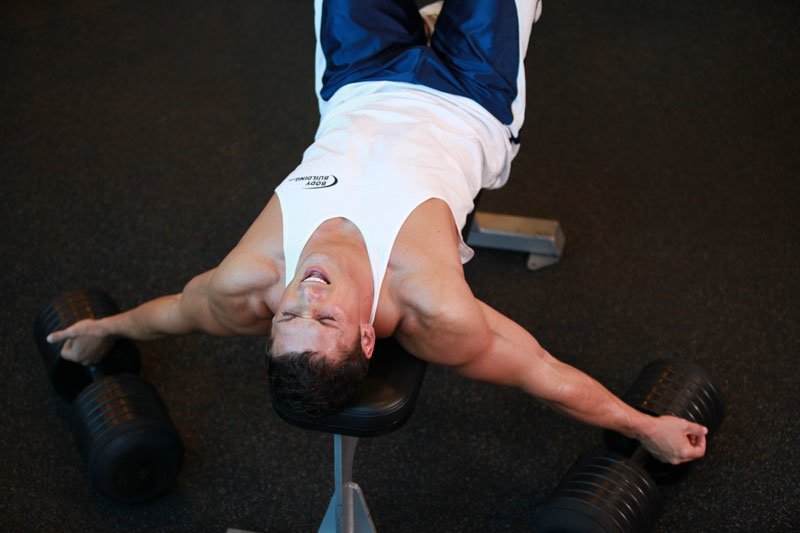
Don't Rush To Lift The Heavy Dumbbells. You'll Just End Up Injuring Yourself.
 
Don't Rush To Lift The Heavy Dumbbells.
You'll Just End Up Injuring Yourself.
 
  4. Don't Waste Time On The Opposite Sex!

Let's be serious. We all started this endeavor for many reasons. One reason is common among all of us. We want to hook up with some smoking hot girl or some ripped up dude and there is no shame in admitting it. The fact is though, although we all want to meet our future love interest in the gym, there is work to be done. You are not going to build up that body to impress people if you don't work at it. For now, avoid staring and trying to get the attention of the hottie and focus on the task at hand.
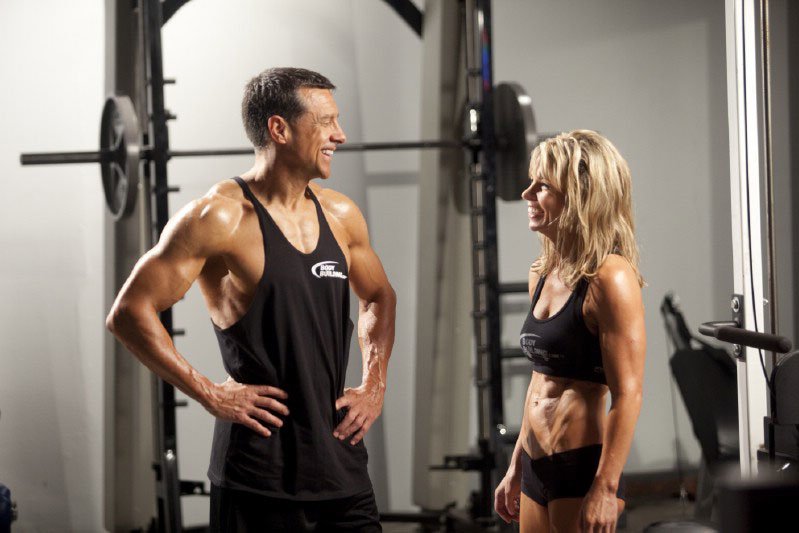
Remember You Are At The Gym To Improve Your Physique Not Get A Date.

Remember You Are At The Gym To
Improve Your Physique Not Get A Date.


5. Don't Be Impatient!

I don't want to burst your bubble or your ego, but this isn't going to happen overnight. That is just a fact of life in bodybuilding and fitness. Have you ever heard the expression "good things come to those who wait"? Well, it kind of applies here. Although you should work at achieving your goals, being patient and knowing that it comes with time will keep you from getting frustrated and that will keep you motivated to train in order to eventually meet those goals. Deal with curling the 15's or 20's for now and with time and effort, you will get to the bigger dumbbells. Patience is definitely a virtue in this game. 

6. Don't Be The "Intense Guy!"

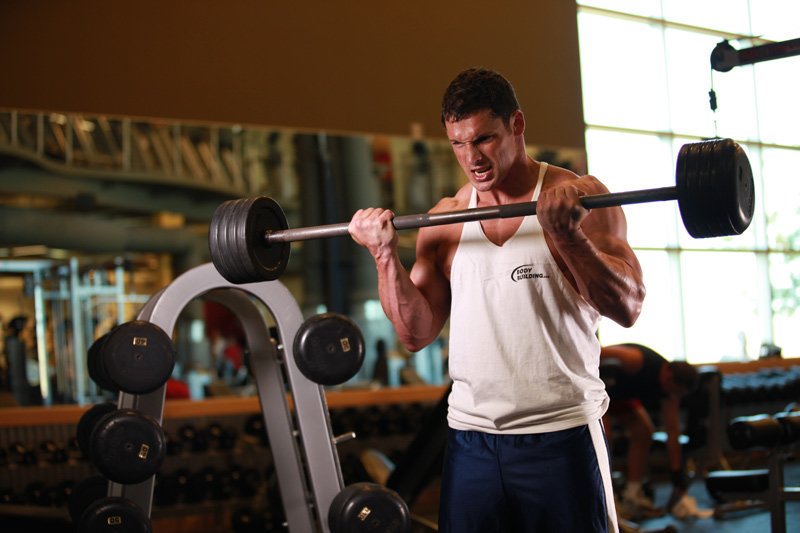
I am sure you see him and if you don't, you sure will hear him. In every gym there is the one guy who feels the need to scream his head off and yell with every rep like his life depends on him accomplishing it. The fact is most people look at him like he is a few plates short himself. You can put in hard work and give effort without being the star of a fitness horror movie. The grunting and screaming isn't necessary to make yourself appear strong, intense, or "hardcore". Save yourself a lot of humiliation and don't do this.
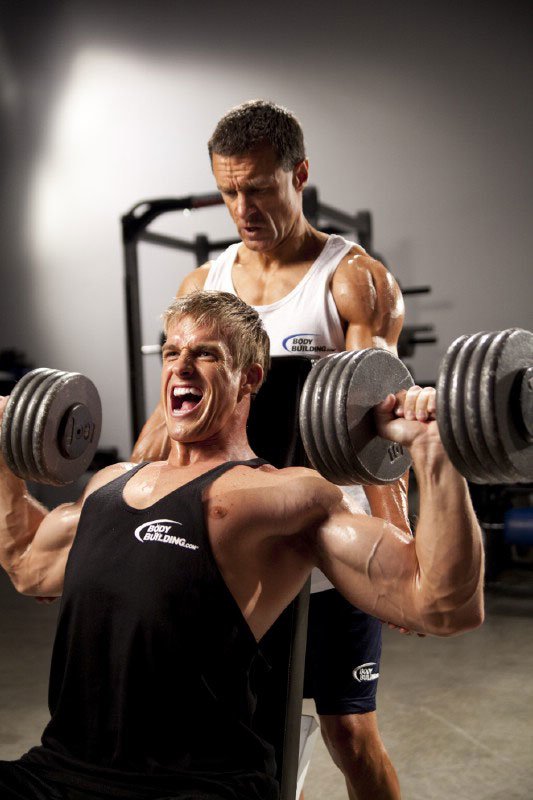
Screaming With Each Rep Doesn't Make You Intense, But Actually Just Makes You Look Silly.

Screaming With Each Rep Doesn't Make You
Intense, But It Will Make You Look Silly.


  (Source: Bodybuilding.com)

Dec 8, 2010

Top 12 training guidelines for sensible high intensity workouts by Cyberpump


Have you ever wondered what the big deal with HIT is? We have the answer! Read on to discover the top 12 training guidelines for sensible high intensity weight training! Get the most out of your time at the gym!

Now, for many years there has been a need by some to define high intensity training, better known as "H.I.T." 
HIT is a safe, sensible, and practical approach to strength training and conditioning. Methods vary but so do needs. It is up to the coach or trainee to match them to their situation. HIT is not a "secret training method" that only a select few know. Its use is very wide spread and sources of information abound.

Training Frequency

Optimal Training

Training 3 Days a Week
I feel that 3 days per week is the best way to go for most people. It works for body composition, lean muscle improvements, strength, and conditioning. Most people don't train hard enough to run the risk of over training and three days is not that hard to get in.
This can be all weights or a mix of weights and body weight training. Throw in some implements to make things interesting and on your off days get outside and enjoy being active. Don't be afraid to be active. Practice sensible eating and you should do well.
Training 2 Days a Week
This also works, and for very busy people it may be ideal. Also, for the rare few (and I mean few) that train the way we used to in Deland, this is or can be a good frequency of training. Again, you can do all weights or mix with body weight training. It becomes more important to stay active on your non - training days if you are after a "lean look."
You can accomplish your goals of adding strength and maintaining muscle by training only 2 days a week. Some will even add muscle but you need to make these workouts count. Focus your training and try to do as much as you can in the space of your workout. Training should take anywhere from 30 to 60 minutes. Some really hard workouts can be completed in 15 minutes and change.
In my opinion, when you are training only twice a week, "conditioning" starts to suffer. I recommend participating in some kind of outdoor activity, something like jogging, water skiing, swimming, soccer, surfing, boogie boarding, walking, or biking. Get outside, burn some calories, stay fit and stay active. Twice a week can work but you have to practice sensible eating if you want to shed some fat.
I Recommend Participating In Some Kind Of Outdoor Activity Such As Water Skiing.
 

I Recommend Participating In Some Kind
Of Outdoor Activity Such As Water Skiing.
Training 1 Day per Week
I don't find this to be optimal. Sometimes you can't help it. Life gets busy and you can only get one a week in. I feel that you can continue to add strength on one training session a week as long as you really focus on weight progression in your exercises. I feel that body composition suffers for most people.
You will tend to get fat and your conditioning will suffer, as well as your "work capacity." You'll really have to cut your calories if you want a lean look. So much so, that you may find you don't have enough energy for a heavy workout. Your strength can suffer also. It's around this area that "Infrequent Training" starts to become too infrequent. You better be active as heck if you only workout once a week or you will become fat.
Less Than 1 Time a Week
Less than once a week training: Look I'm going to be honest here. I don't care how many books or articles you have that say you can succeed on this. What you will end up with is an unhealthy and undesirable body.
You'll have very little muscle, and your conditioning will be zero. You just can not do it in five minutes a day whenever you feel like it as some would have you believe, and you can not do it with workouts that never happen.
Having the best Fitness Library means zilch if all you ever do is read and talk about your workout. You have to work out! You have to raise your heart rate. You have to spend some sweat and effort. You have to be consistent. You have to pay attention to what and how much you eat. All the best intentions in the world will not make up for lack of effort in the gym. AND neither will the latest "Fitness Craze."
The experts on the Internet will go on and on about "I use this and I use that" but the bottom line is weight training works. Combine weight training with body weight training and conditioning and just do it. It has worked for over 50 years as I know it and continues to work. Gimmicks come and go but sensible strength training will go on and on. BUT you have to show up, work out, and be consistent!
Argue less on the Bodybuilding sites and forums and you will probably find the extra few minutes needed to "just go lift." I don't care how you do it or whose method you use, "just go lift."
All said and done if you have been training consistently and regularly, don't be afraid to take some time off to recharge now and then. Best effort equals best results. Not everyone will end up developing "Huge Muscles." Some will and some won't. It depends on your potential and effort. And remember, women don't end up looking like a man because they lift weights. So just throw that excuse out the window. Women look good with some lean muscle on them.
Argue Less On The Bodybuilding Sites And Forums And You'll Find The Time Needed To Go Lift.
 
Argue Less On The Bodybuilding Sites And Forums
And You'll Find The Time Needed To Go Lift.


Sensible Training Guidelines For High Intensity Training

  1. Perform 1-3 sets of 4-6 exercises for the lower body and 6-8 exercises for the upper body, and not more than 12 exercises in any workout most of the time.
  2. Select a resistance for each exercise that allows you to do between 10-15 repetitions. Some may need 15-20 reps. Lower reps may be used at times.
  3. Continue each exercise until no additional positive repetitions in good form are possible. When 15 or more repetitions are performed, increase the resistance by approximately 5 % the next workout. Go for overload.
  4. Work the largest muscles first and move quickly from one exercise to the next. This procedure develops cardiovascular endurance.
  5. Concentrate on flexibility by slowly stretching during the first couple of repetitions of a movement. Don't grip equipment tightly.
  6. Accentuate the lowering portion (negative) of each repetition. If the weight stack is banging, you've lost control.
  7. Move slower, never faster, if in doubt about the speed of an exercise. Don't move around in equipment while training.
  8. Do everything possible to isolate and work each large muscle group to momentary overload. Don't hold your breath!
  9. Attempt constantly to increase the number of repetitions or the amount of weight or both. But do not sacrifice form in an attempt to produce results. Train safe! Don't hold your breath! Your goal should be to exceed the last workouts performance, in as many exercises as you can.
  10. Train no more than three times a week, Avoid over training!
  11. Keep accurate records--date---resistance---repetitions---of each workout.
  12. Use any equipment that you have----machines or free weights---- the main point is safety. The muscles do not have brains that tell them if you are using machines or free weights, they only know resistance. The myth that free weights are better than properly developed machines is just that--a myth! Use advanced HIT principles sparingly, such as: breakdowns, pre-exhaust, negative only, negative accentuated, 3X3's, 30's Day, forced reps and more.
Keep Accurate Records Of The Date, Resistance, And Repetitions, Of Each Workout.

Keep Accurate Records Of The Date,
Resistance, And Repetitions, Of Each Workout.

(Source: Bodybuilding.com)

Dec 7, 2010

10 Things to Say (and 10 Not to Say) to Someone With Depression

How to show you care

What do you say to someone who’s depressed? All too often, it’s the wrong thing.

“People still have such a cloudy idea of what mental illness is,” says Kathleen Brannon, of Herndon, Va.

“Sometimes people will say, ‘Oh, you’re depressed? Yeah, I’ve been depressed,’ and you realize just the way they say it that, nooo, it’s not quite the same thing. It’s not just that I’m feeling sad or blue.”

Below is a list of helpful things to tell someone battling depression, followed by what not to say, courtesy of the Depression Alliance. 
here-for-you-depression

I’m here for you


What to say:
You’re not alone in this.

What NOT to say:
There’s always someone worse off than you are


you-matter-depression

You matter


What to say:
You are important to me.

What NOT to say:
No one ever said that life was fair.

Let me help


What to say:
Do you want a hug?

What NOT to say:
Stop feeling sorry for yourself.


Depression is real


What to say:
You are not going crazy.

What NOT to say:
So you’re depressed. Aren’t you always?


there-is-hope-depression

There is hope


What to say:
We are not on this earth to see through one another, but to see one another through.

What NOT to say:
Try not to be so depressed.
 

You can survive this


What to say:
When all this is over, I’ll still be here and so will you.

What NOT to say:
It’s your own fault.

do-my-best-depression

I’ll do my best to understand


What to say:
I can’t really understand what you are feeling, but I can offer my compassion.

What NOT to say:
Believe me, I know how you feel. I was depressed once for several days.

You won’t drive me away


What to say:
I’m not going to leave you or abandon you.

What NOT to say:
I think your depression is a way of punishing us.
 

I care about you


What to say:
I love you. (Say this only if you mean it.)

What NOT to say:
Haven’t you grown tired of all this “me, me, me” stuff yet?


get-through-depression

We’ll get through this together


What to say:
I’m sorry that you’re in so much pain. I am not going to leave you. I am going to take care of myself, so you don’t need to worry that your pain might hurt me.

What NOT to say:
Have you tried chamomile tea?


 (Source: Health.com)

The Top 10 Rules Of Successful Clean Bulking

It is pretty safe to say that everyone wants to have a muscular, lean physique. Getting that muscular physique is going to take a lot of hard work and dedication. With all of the different bulking programs out there it is easy to become lost and confused as to what is the correct way to gain muscle. To help with that confusion I am going to list my "Top 10 Rules Of Successful Clean Bulking" These rules are the main principles and keys to a successful bulking program and apply to anyone who is looking to gain muscle.

 1. Pick Your Goal: Bulking Or Cutting

Unless you are carrying a large amount of fat or you are just starting to weight train you are not going to lose fat while trying to gain muscle. If your primary goal is to gain muscle then focus on that.
If Your Primary Goal Is To Gain Muscle Then Focus On That

 2. Track Your Progress
To keep your gains lean you want to gain at a rate of about 0.5-1 pound per week. If you don't track your progress then you won't know if you aren't gaining at all or if you are gaining too fast and adding unnecessary body fat.
To Keep Your Gains Lean You Want To Gain At A Rate Of About 0.5-1 Pound Per Week

3. Eat Enough Calories To Grow But Don't Get Sloppy
You will most likely gain some fat when bulking. In order to gain muscle you have to eat more calories than you burn and doing so can lead to some fat gain. Some people try to stay shredded while gaining muscle by either not eating enough calories or doing too much cardio. Doing so may allow them to stay super lean but they won't be gaining much muscle. At the other end of the spectrum some people eat everything in sight to get as many calories as they can. This strategy will definitely lead to weight gain, but a lot of that weight will be fat and not muscle. The best approach is to eat sufficient calories to gain muscle but don't get crazy with your eating and still doing some cardio to maintain cardiovascular health.

4. Do Some Cardio While Bulking
I recommend doing 2-3, 20-30 minute sessions of cardio each week while bulking (ideally on a non-weight training day) to maintain cardiovascular health and keep you fit. Cardiovascular training improves the heart's ability to pump blood and increases oxygen uptake into cells. Strenuous weight training can be aerobically taxing and therefore having an efficient, strong heart will allow you to train harder. In addition, a fit person burns more fat at rest than an unfit person, so doing cardio while bulking can help keep you lean.
Cardiovascular Training Improves The Heart's Ability To Pump Blood And Increases Oxygen Uptake Into Cells

Cardiovascular Training Improves The Heart's Ability To Pump
Blood And Increases Oxygen Uptake Into Cells.


5. If You Are Getting Stronger You Will Get Bigger
One of the best ways to know if you are gaining muscle is if you are getting stronger. While it is possible to gain strength without gaining size for the most part if you are gaining strength you will gain size. If you are bulking and not gaining strength or losing strength then something needs to be fixed.

6. Get Adequate Rest And Recovery Time

Remember you grow outside of the gym! Your workouts serve as the stimulus for muscle growth but if you are not getting adequate rest and recovery time between workouts your results will suffer. I recommend weight training 4-5 times per week max.

7. Eat 1-1.5g Of Protein Per Pound Of Bodyweight Every Day
We all know the importance of protein for muscle growth, so make sure you are eating 1-1.5 grams of protein per pound of bodyweight every day. If you are having trouble eating enough protein, adding in protein shakes is an easy way to boost your protein intake.


8. Don't Neglect Your Fat And Carbohydrate Intake

Just because you are getting enough protein doesn't mean you can overlook your fat and carbohydrate intake. Both fats and carbohydrates are needed to support muscle growth so be sure you are skimping on these nutrients.


9. Post Workout Nutrition Is Vital
While all your meals are important, special attention should be paid to your post-workout meal or shake. To maximize muscle growth and recovery, a post workout shake consisting of whey protein and a fast-acting carbohydrate (like dextrose) is ideal. Adding supplements like creatine monohydrate (5 grams) and glutamine (5-10 grams) to your post-workout shake will further enhance its effectiveness. Simply adding a post-workout shake to your regime will accelerate your results so don't skimp out on it!
Special Attention Should Be Paid To Your Post-Workout Meal Or Shake
 
Special Attention Should Be Paid To Your Post-Workout Meal Or Shake.
10. Follow The Daily Bulking Trainer
Instead of getting bogged down with every little detail the above 10 rules are what you should focus on; don't lose sight of the big picture. Following my top 10 rules will lead to a successful bulking program and allow you to get that muscular, lean physique you have been working towards.

(Source: Bodybuilding.com)